Made-to-measure open wooden wardrobes in Cullera
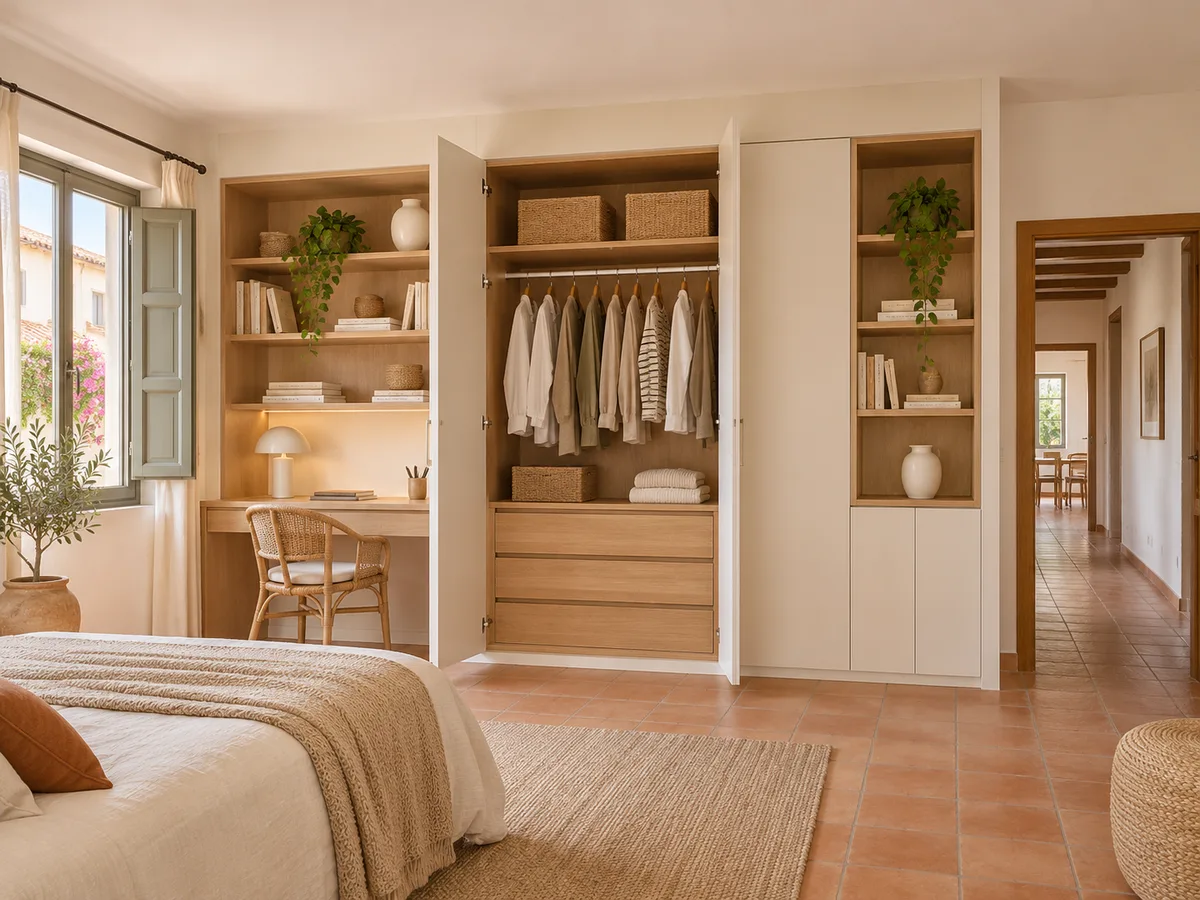
An open wooden wardrobe is a piece of furniture without doors that takes up one wall of the bedroom and leaves your clothes on show, with hanging rails, shelves and drawers designed to your measurements. In Cullera we treat it as a piece with real character, not a scaled-down walk-in wardrobe. Here we look at when it makes sense, how it is laid out, what is worth protecting and what decides the final result.
Shape your next wardrobe.
Try out the measurements, plan the interior layout and choose your finishes. See your idea take shape and share it with us so we can prepare your quote.
Send us your configuration with your measurements and we'll give you a guide price within 24 hours, free of charge. The measuring visit at your home comes afterwards.
When a wardrobe without doors works
A wardrobe without doors works when you like to see what you are going to wear and are prepared to keep things reasonably tidy. If you want to pick an outfit at a glance, a clear front saves you a few movements. If, on the other hand, your clothes tend to pile up in heaps, an open wall will show everything.
This type of wardrobe is usually placed on a single wall, between two corners or beside a window, and it does not need a whole room the way a walk-in wardrobe does. That is why it suits bedrooms of an ordinary size where hinged or sliding doors would take away from the presence of the wood.
Before anything is drawn, it helps to count how many hanging garments, how much folded clothing and how many pairs of shoes you deal with every day.
Putting together a wall of hanging rails, shelves and drawers
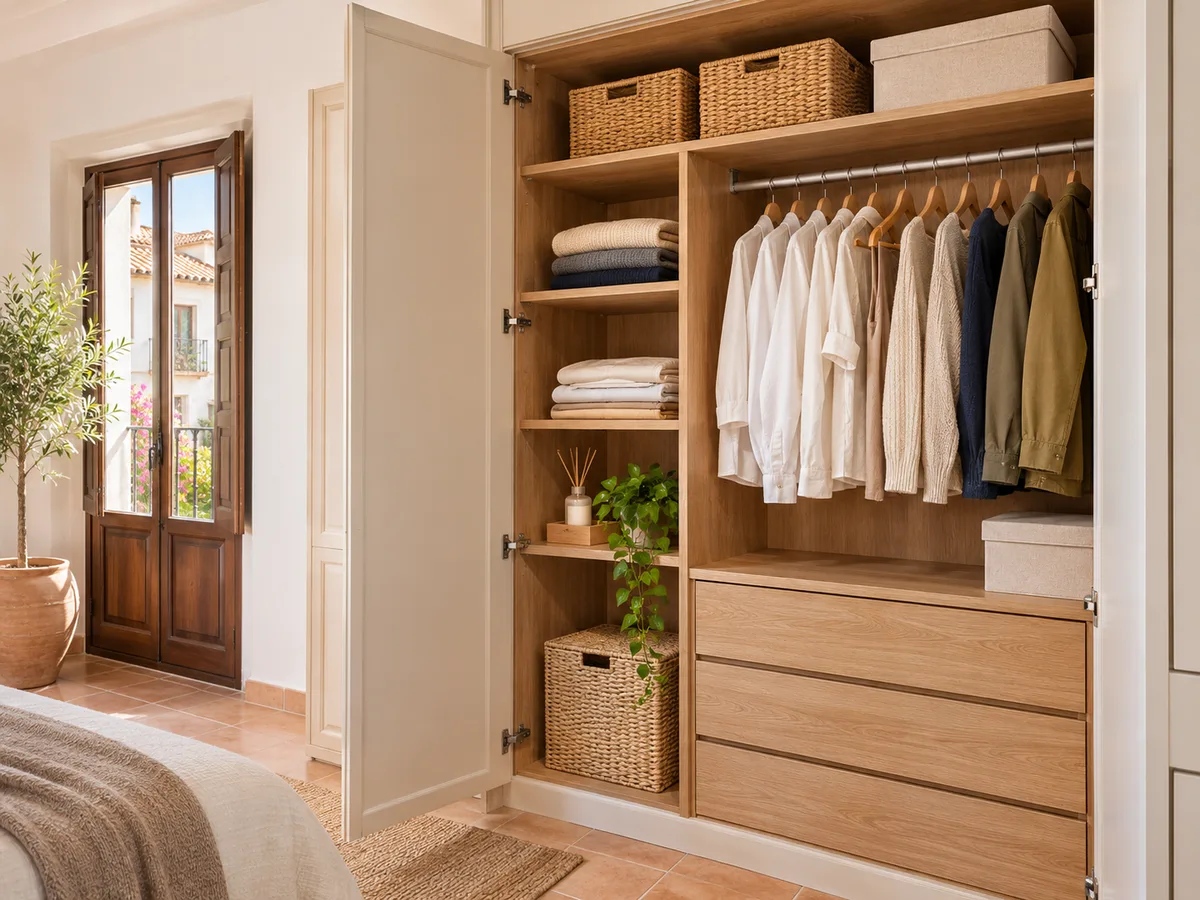
The layout starts from a simple question: what do you want within easy reach, and what can sit higher up or lower down? Rails for shirts and dresses need more free drop than those for trousers and jackets. Open shelves suit folded jumpers and structured bags. Drawers hide whatever doesn't look its best: underwear, socks, belts.
A well-planned open wooden wardrobe alternates long spaces with compact modules so the eye can rest. A single rail running from end to end looks heavy; two rails separated by a column of shelves lighten the whole piece and make cleaning easier.
In the configurator you can move modules around until you have a first idea, then send it to the team to look over.
What to leave on show and what to protect
The practical rule is to leave open what you use every week and close off whatever gathers dust or looks out of place. Shirts, dresses and blazers look better on show, and whatever hangs in an open wardrobe airs by itself. Delicate garments, wool coats and formal wear, on the other hand, are better off in a breathable cover or a module with a door.
In a coastal town like Cullera, where the humidity rises in summer, it is best to leave some air between garments and avoid packing the shelves right to the edge. A wardrobe without doors breathes better than a closed one, but dust settles sooner on the horizontal surfaces.
A common solution is to mix the two: two-thirds open and one-third with drawers or closed fronts for the things that are less of a feature.
Have you already measured the space?
Send us a photo and the approximate measurements on WhatsApp and we'll give you some initial guidance.
Visible material: solid wood, veneer or decorative finish
- 01
In an open wardrobe the material has nowhere to hide behind a door, so every edge is seen up close. You have three routes. Solid wood offers the richest grain and can be refinished, but it is heavy and moves with changes in humidity. Natural wood veneer on board gives a similar look with greater stability over long spans. Board with a decorative finish imitates the grain at a lower cost and is easy to clean.
- 02
Each option changes how the piece is built and how much a loaded shelf can take. A long shelf with heavy jumpers is not the same as a short one with lightweight bags. What matters is that the name of the material is written down accurately in the proposal, and that nobody calls something wood when it is a finish.
Sides, edges and back panel as part of the design
In a closed wardrobe nobody sees the back or the thickness of the edge. Here they do. The visible sides can end in a thicker panel that frames the piece, with a softened or square edge depending on the style of the room. The edges of the shelves should be made of the same material as the face, not a strip in a different colour.
The back deserves a decision of its own. It can be the wall itself, painted, a wooden panel, or a contrasting backdrop that makes the clothes stand out. If you leave the wall, it will be on view every time you take something out, and any unevenness in the plaster will show.
With a wardrobe without doors, these details go from being invisible to taking centre stage on the wall.
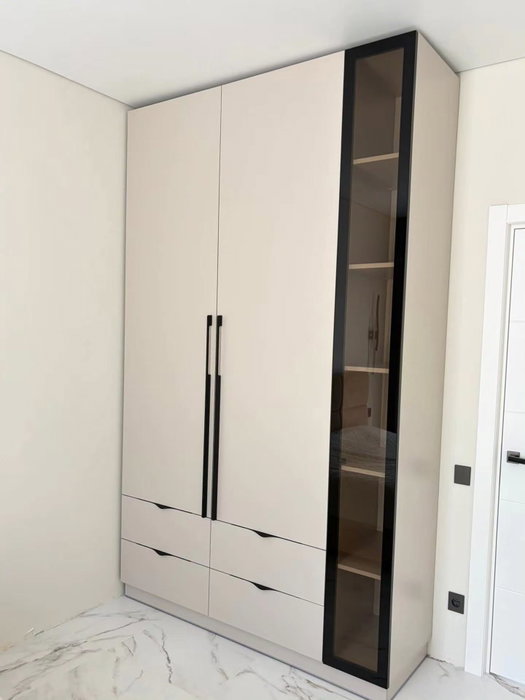
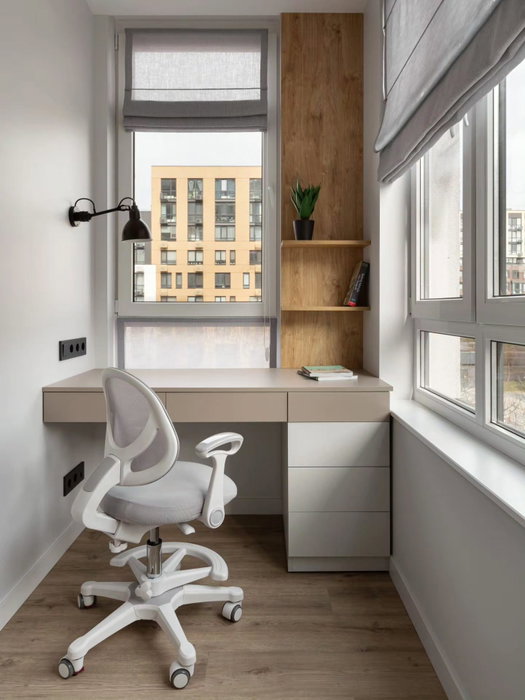
Latest work by SI, ARMARIO
@si.armario
Made-to-measure wardrobes and walk-in wardrobes
Latest posts
Everyday tidiness and keeping it clean
An open wardrobe asks for a small, steady habit: putting each garment back in its place and running a dry cloth over the shelves from time to time. If a lot of dust gets into your home from nearby building work or from the street, you will need to clean more often, and you may want to close off some of the modules.
To make upkeep easier, avoid corners that are impossible to reach and gaps so narrow that an arm won't fit. Shelves with a rounded edge are easier to clean than those with a sharp one. Baskets and boxes in natural fibre help to group small items without spoiling the wooden look.
If you are after a calm result, an open wooden wardrobe with clothes arranged by colour and by zone adapts easily to any layout.
Ask us to come and measure up in Cullera
- 01You leave us your name and your area.
- 02We message you on WhatsApp to agree a day.
- 03The measuring visit costs €50 and is free if you place an order.
Light and access in an open layout
An open wall is on show, and it looks different depending on how the light falls. A side window brings out the grain, but it can fade clothes that sit exposed to the afternoon sun for hours. A strip of warm light under the shelves or built into the rail helps you choose in the evening without switching on the main light.
Also check the sockets and switches on that wall: if you are going to cover or relocate them, it is better to know before anything is made. Bedroom doors, radiators and skirting boards all affect where the piece can start and finish.
With these details and a few photos of the wall in your home in Cullera, the team can work out whether the wardrobe without doors fits as you imagine it or needs small adjustments.
What changes the quote in Cullera
- 01
When you ask for an open wooden wardrobe, three factors move the figure more than any others: the material you choose, the number of drawers and the length of wall it covers. Drawers need runners and fronts, so they add more than an open shelf. Thick side panels, wooden backs and hard-wearing varnishes also count.
- 02
Once we receive your configuration with measurements, the team gives you a guide price within 24 hours, at no cost. If you decide to go ahead, the measuring visit costs €50, which is not charged when you place your order. Manufacturing takes two to three weeks on average, and installation is arranged separately.
- 03
To see the whole process from Cullera, read how we work or go straight to the quote.
Enquiry
Tell us about your project in Cullera
- 1We read your message and look at your photos.
- 2We reply on WhatsApp with a first figure.
- 3We measure up and prepare the final quote. The measuring visit costs €50 if you don't go ahead with the order and is free if you do.
We don't cut a single board until you've approved the design and the price.
Questions
Frequently asked questions about wardrobes in Cullera
After installation: warranty and care for your wardrobe.
Open wardrobe or open walk-in wardrobe: which suits me better?
An open wardrobe is a piece of furniture that takes up one wall of the bedroom. A walk-in wardrobe is a room or corner of its own, with space to move between the modules. If you have a free wall but no spare room to get dressed in, the first is what you are looking for.
Where do I keep my winter coat if the wardrobe has no doors?
The sensible thing is to keep out of sight whatever you don't use for months. You can set aside a module with doors at the top, or use lidded boxes and breathable fabric covers. That way the open wardrobe shows only what you wear every day.
Can I mix open shelves with drawers that close?
Yes, and it works very well in bedrooms in Cullera with limited depth. The drawers hide the small things and the shelves show off what looks good. The usual approach is to put the drawers in the lower or middle section and the shelves higher up.
Does it have to be solid wood from top to bottom?
Not at all. You can combine solid wood on the visible sides, natural veneer on long shelves and board with a decorative finish in the less exposed parts. What matters is that the proposal names each material clearly.
What measurements do I need to start designing an open wooden wardrobe?
The width and height of the wall, the depth you want, and the position of sockets, windows and doors. With those figures and a photo or two, the configurator can prepare a first design, which is then refined at the measuring visit.
Shall we talk about your project?
Send us a photo of the space and some approximate measurements on WhatsApp: we'll give you some initial guidance and arrange the measuring visit.